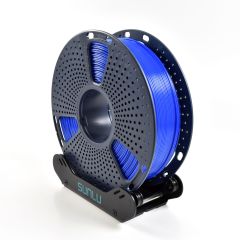
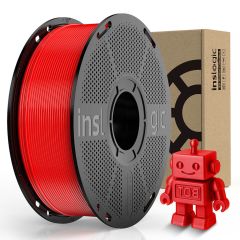
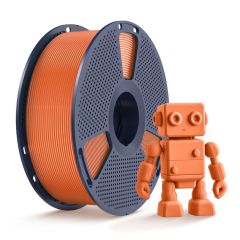
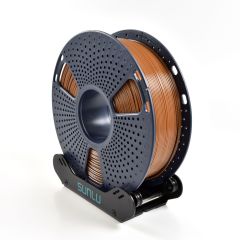
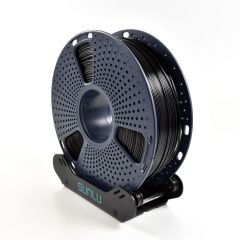
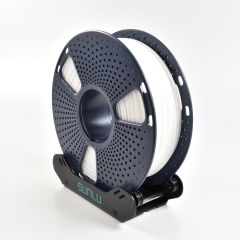
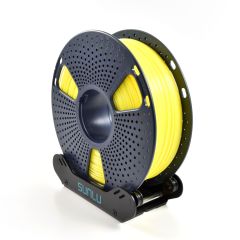
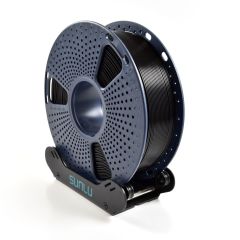
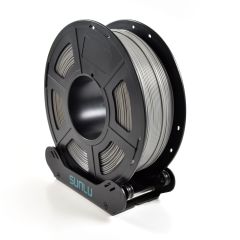
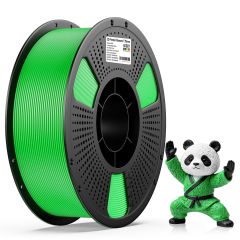
PETG Orange Filament 1.75mm 1kg. Our PETG filament strikes the perfect balance between rigidity and flexibility, making it ideal for functional parts, mechanical components and outdoor prints.
PETG 3D Printer Filament 1.75 mm 1 KG – High-Strength
Perfect Strength & Flexibility Balance - Our PETG filament strikes the perfect balance between rigidity and flexibility, making it ideal for functional parts, mechanical components and outdoor prints.
Strict Dimensional Accuracy - With a tight ±0.03mm diameter tolerance, it ensures consistent flow and prevents clogs for reliably smooth and successful prints.
Tangle-Free Spool - PETG filament is meticulously wound to be tangle-free, providing a smooth and uninterrupted printing experience from start to finish.
Weather & Chemical Resistance - Your finished prints will exhibit excellent resistance to moisture, chemicals, and heat, ideal for both indoor and outdoor applications.
Wide Compatibility PETG filament - It is widely compatible with most FDM 3D printers like Creality Ender 3 and Artillery Genius, ensuring easy setup and great results.
Vacuum-Sealed Packaging - Each spool PETG filament is vacuum-sealed with desiccant to lock out moisture, guaranteeing dry, ready-to-use filament right out of the package.
Low Warping & Good Adhesion - 3D filament exhibits minimal warping and offers excellent bed adhesion, making your printing process easier and more efficient.
What are the best PETG print settings for FDM 3D printers?
For the best results when printing with PETG filament, set your nozzle temperature between 230 °C – 250 °C and your bed temperature between 70 °C – 85 °C. Use a slower print speed (40–60 mm/s) and enable cooling at 50–70% after the first few layers. These PETG print settings help improve adhesion, minimize stringing, and ensure smooth extrusion.
PETG vs PLA: Why Choose PETG Filament
Compared with PLA filament, PETG filament offers a stronger, more durable, and cost-effective solution for 3D printing.While PLA is popular for easy printing, PETG provides better long-term value — it’s more affordable, has a higher melting point (230 – 250 °C), and performs well even under outdoor conditions without turning yellow or oxidizing over time.Thanks to its excellent UV and weather resistance, PETG filament can stay outside for months without losing strength or color, making it ideal for functional prototypes, outdoor parts, and mechanical components.If you need a material that combines strength, heat resistance, and great surface finish, PETG is a perfect upgrade from PLA.
How should I store PETG filament to maintain print quality?
Store your PETG 3D printer filament in a dry, sealed container with desiccant packs when not in use. PETG absorbs moisture from the air, which can cause bubbles and extrusion issues. For long-term storage, use a vacuum-sealed bag or filament dryer box to keep your PETG filament dry and print-ready.